 S01 E01
1979-01-16 / 55 MIN
THE INFINITE VARIETY
The first ever episode of the landmark natural history series Life on Earth. David Attenborough explores the wildlife and landscape that inspired Charles Darwin's theory of evolution.
PLAY EPISODE
The story of life, from the first primitive cells to the plants and animals that now live around us.

SERIES GUIDE
S01 E011979-01-16 / 55 MIN
The first ever episode of the landmark natural history series Life on Earth. David Attenborough explores the wildlife and landscape that inspired Charles Darwin's theory of evolution.
PLAY EPISODE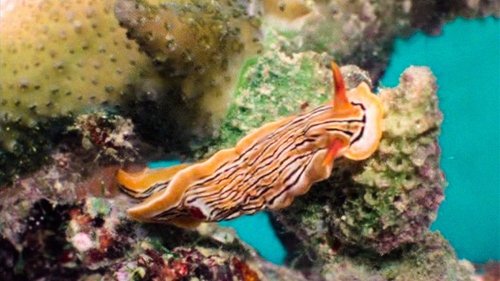 S01 E02
1979-01-23 / 54 MIN
Bright blue starfish, crimson feather stars, shell-less snails in designs as extravagant as any Paris fashion show, shrimps of every colour, others that are transparent - just a sample of the animal wonders to be found in a small area of the Great Barrier Reef.
PLAY EPISODE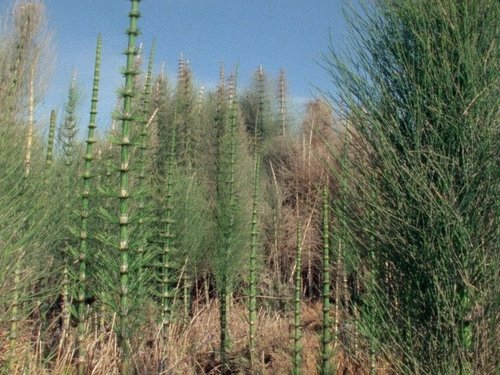 S01 E03
1979-01-30 / 54 MIN
For most of Earth's history there was no life on land. But over 400 million years ago some tiny plants began an invasion from the water, closely followed by the first animals - the ancestors of millipedes and insects.
PLAY EPISODE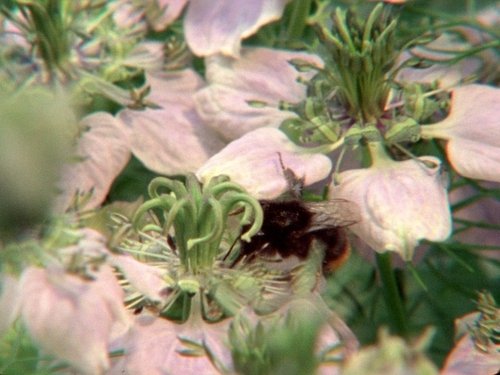 S01 E04
1979-02-06 / 55 MIN
David Attenborough looks at the role of a few of the millions of insect species, some of which have developed extremely close relationships with plants. Insects pollinate flowers and in some cases neither flower nor insect can survive without the other.
PLAY EPISODE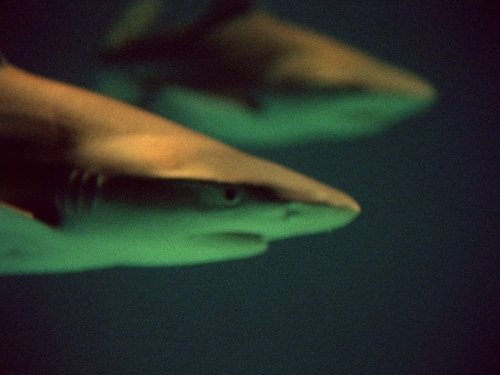 S01 E05
1979-02-13 / 55 MIN
Fish occur in populations of billions and there are over 30,000 species, more than in any other group of backboned animals. The development of the backbone was a crucial advance in evolution -and it probably came from a most unlikely source, a little jelly-like creature called a sea squirt.
PLAY EPISODE S01 E06
1979-02-20 / 55 MIN
Some 350 million years ago, evolution reached one of its most crucial stages when fish crawled from the water onto the land and became amphibians. Today, newts, salamanders, toads and frogs still survive in great quantities, and there is even one species of frog where the male gives birth from its mouth! Presented by David Attenborough.
PLAY EPISODE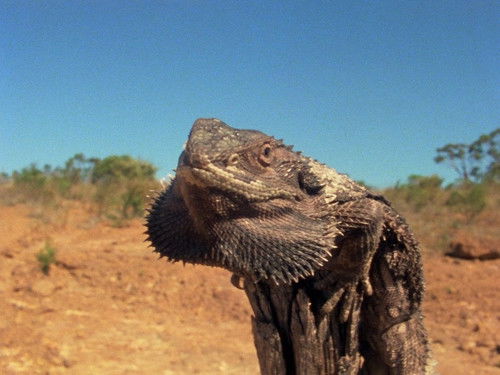 S01 E07
1979-02-27 / 55 MIN
David Attenborough looks at the history of reptiles, the first back-boned creatures to solve the problems of living high and dry on the land. Their waterproofed skin and sealed eggs enabled the mighty reptiles to rule the world.
PLAY EPISODE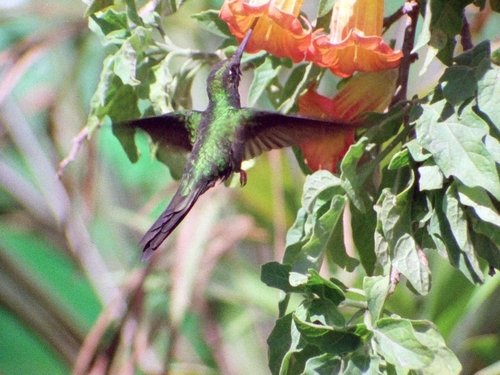 S01 E08
1979-03-06 / 54 MIN
The story of life, from the first primitive cells to the plants and animals that now live around us. David Attenborough examines the uses and advantages of birds' unique possession - the feather. Man has yet to invent anything that, weight for weight, is as strong as the feather. Feathers are insulators, they provide the surface of the most perfect aerofoils known - bird's wings. Plus they play a central role in courtship.
PLAY EPISODE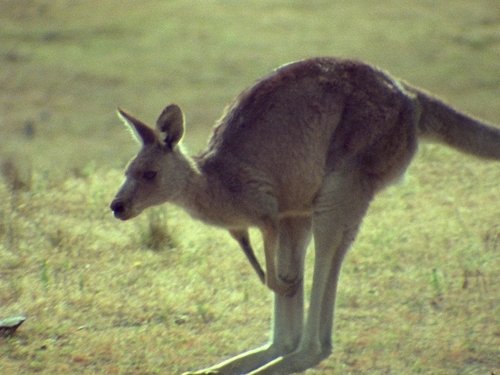 S01 E09
1979-03-13 / 54 MIN
Mammals have proved to be one of the most adaptable products of evolution. David Attenborough looks at their evolution from reptiles 200 million years ago. This remarkable transition involved the development of mechanisms for regulating body temperature, for allowing the young to develop in the womb and for suckling newborns. Attenborough also explores the South American origins of marsupials and their colonisation of Australia.
PLAY EPISODE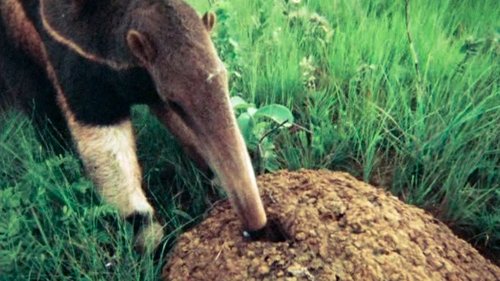 S01 E10
1979-03-20 / 53 MIN
A little furry animal from the jungles of South East Asia, called a tree shrew, has attracted great interest from scientists because it shows how a great group of animals may have originated - the mammals. David Attenborough looks at some of the huge variety of mammals. Bats number over a thousand species, many hunt insects, some sip nectar, drink blood, and even catch fish. Contrast those which use sonar with the great whales that sing, the star-nosed mole and the giant anteater, and the potential variations become dramatically clear.
PLAY EPISODE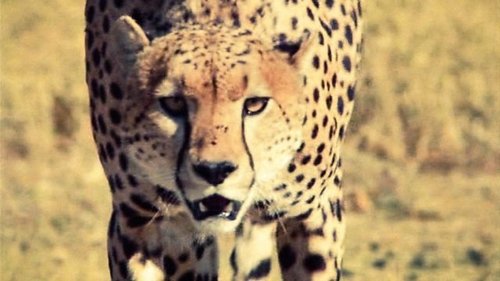 S01 E11
1979-03-27 / 55 MIN
David Attenborough explores the eternal duel between the hunters and the hunted - one of the driving forces of evolution. As the hunters develop speed and cunning, the prey becomes increasingly fast and wary in order to stay alive. Nowhere is this seen better than on the plains of East Africa.
PLAY EPISODE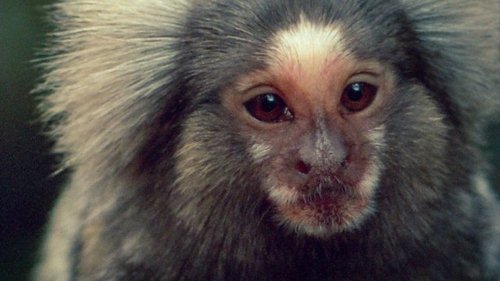 S01 E12
1979-04-03 / 55 MIN
David Attenborough's now-legendary encounter with young gorillas is featured in this episode as he looks at the history of primates, whose ancestors sought their fortune in the treetops. There they developed binocular vision for accurately judging distances, and the ability to grasp trees with a firm grip. The group includes dazzling gymnasts, deafening choristers and highly cultured monkeys.
PLAY EPISODE


REVIEWS
0 REVIEWS